
Why Kids Can Read But Don’t Understand What They Read
Janel Nansenn · Apr 30

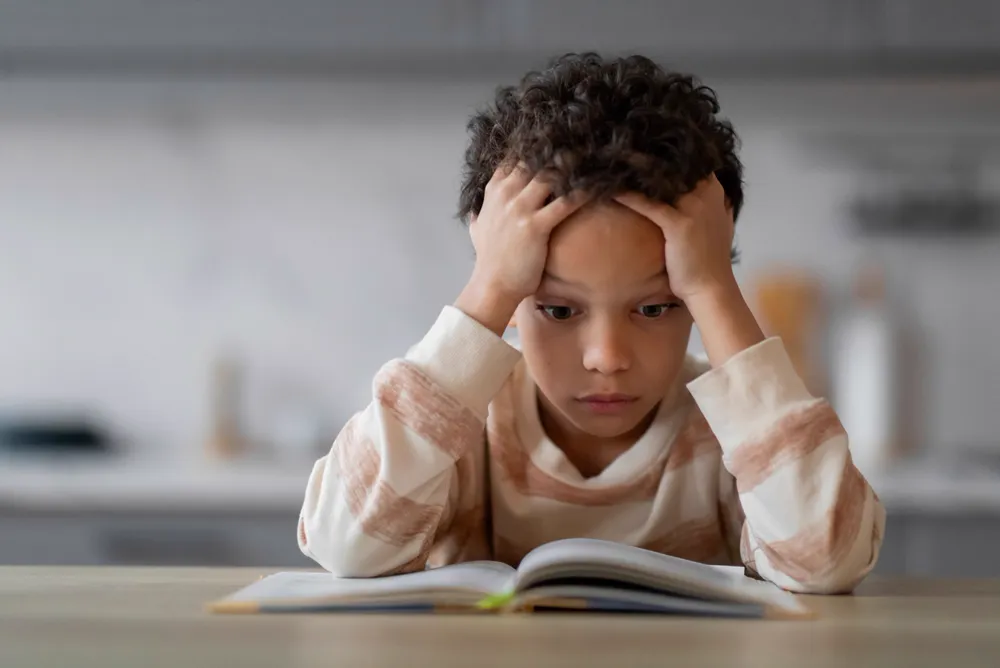
Watching your child read a chapter book aloud perfectly can be a proud moment. They pronounce every word correctly, pause at the commas, and read with expression. But when you ask them what the story was about, they look at you blankly. They might give a vague answer, or they might not remember anything at all.
It is incredibly frustrating for parents to wonder why kids read but don’t understand. You know they are smart. You know they can see and say the words. Yet, the meaning of the text simply slips away. This disconnect leaves both parents and students feeling confused and overwhelmed, especially as schoolwork becomes more demanding.
The root of this issue usually is not a lack of effort or a problem with intelligence. Instead, it often comes down to a missing foundational skill: visualization. Visualization is the ability to create mental images while reading. When children can picture the story or the facts in their minds, they build meaning. Without this skill, words are just sounds that quickly fade from memory.
If your child reads but doesn't understand, knowing how to build this foundation is the first step toward easier learning. Fortunately, there are specific reading comprehension programs for elementary students designed to teach this exact skill. By addressing the root cause, you can help your child transform from a word-caller into an independent, confident reader.

Reading Words Is Not the Same as Understanding Meaning
Parents often assume that reading fluently automatically leads to comprehension. In early elementary school, the focus is heavily on phonics and sounding out words. However, as students progress, the expectations shift dramatically.
Why Some Kids Read Fluently but Struggle With Comprehension
When a child reads fluently but has poor comprehension, they have mastered the mechanics of reading. Their brain is excellent at recognizing letters and matching them to sounds. But reading is actually a two-part process. The first part is decoding the text. The second part is attaching meaning to that text. Some children become so good at the first part that adults assume the second part is happening naturally, even when it isn't.
The Difference Between Decoding and Understanding
Decoding is the act of translating printed words into speech. Understanding is the act of turning those words into a connected, meaningful concept. A student can easily decode a sentence like, "The weary traveler trudged through the dense, snowy forest." But if they do not create a mental picture of a tired person walking heavily through deep snow, they have only processed the sounds, not the story.
What Happens When Students Don’t Create Mental Images
When children read without creating mental images, they are essentially processing empty words. They might hold the information in their short-term memory for a few seconds, but it disappears quickly. This is why kids struggle with reading comprehension. Without a picture in their mind to anchor the information, the brain has no way to store, organize, or recall the details later.
Common Signs Your Child Can Read But Doesn’t Understand
Reading comprehension problems in elementary school show up in specific, observable ways. If you know what to look for, you can identify the struggle early.
Forgets What They Just Read
One of the most common signs is a child who forgets what they read almost immediately. They might finish a page, but when you ask them what happened, they have to look back at the text to find the answer. The information simply did not stick.
Cannot Explain the Story
A child reads but can't explain the main idea or the sequence of events. They might offer disconnected details, like mentioning a character's name, but they cannot summarize the plot or explain why a character made a certain choice.
Struggles With Comprehension Questions
Answering questions at the end of a chapter is often a tearful, frustrating experience. Because they did not build a mental model of the text, they cannot infer meaning or draw conclusions. They rely on guessing or trying to match keywords from the question to keywords in the text.
Needs Directions Repeated
This struggle often bleeds into everyday life. You might find yourself repeating multi-step directions constantly. If a child cannot visualize the steps you are asking them to take, auditory information drops out of their memory just as quickly as written information.
Homework Takes Much Longer Than Expected
When reading but not understanding, elementary students take hours to complete simple assignments. They have to reread passages multiple times to extract a single piece of information, turning a twenty-minute homework session into a draining evening.
Why This Happens to Many Elementary Students
It is natural to wonder how a child could make it to third, fourth, or fifth grade with this missing piece. The answer lies in how our educational system approaches literacy.
Comprehension Is a Skill That Must Be Taught
We often treat comprehension as a byproduct of reading aloud accurately. We assume that if a child reads enough books, they will eventually start understanding them. But comprehension is a distinct cognitive skill. It requires active, deliberate instruction.
Many Students Were Never Taught How to Visualize
Most classroom instruction focuses on sight words, fluency, and vocabulary. Very few students are explicitly taught how to turn words into pictures. If a child does not naturally develop the ability to visualize, they are left relying entirely on rote memorization, which eventually fails as texts become longer and more complex.
Schools Often Test Comprehension but Don’t Teach It
In many schools, comprehension is tested rather than taught. Teachers ask questions about the main idea, setting, and character traits to see if the student understood. If the child reads but doesn't understand, giving them more tests or worksheets does not teach them how to extract that meaning.
The Missing Skill Behind Reading Comprehension
Educational therapists recognize that visualization is the critical bridge between decoding words and true comprehension.
What Visualization Looks Like While Reading
Visualization is like playing a movie in your mind while you read. When a student with strong visualization skills reads about a science concept or a historical event, they see the colors, movements, and shapes in their imagination. They actively update this mental picture as new information is introduced. Learn more about how visualization transforms learning here.
How Visualization Helps the Brain Understand
The brain processes visual information much faster and more efficiently than abstract text. When a child connects words to mental images, they are giving the brain a framework to hold onto. This mental imagery creates a deep, lasting network of meaning.
Why Without Visualization Reading Feels Hard
Without this mental movie, reading is an exhausting exercise in word-calling. The child has to exert massive amounts of mental energy just to hold disconnected words in their working memory. Why comprehension is hard for kids in this situation makes perfect sense: their brain is doing twice the work with half the tools.
Why Working Harder Doesn’t Solve the Problem
When a child struggles with comprehension, the instinctive response from adults is often to ask the child to work harder. Unfortunately, doing more of the wrong thing does not fix the underlying issue.
Reading More Doesn’t Always Improve Comprehension
Telling a child who cannot visualize to "just read more" is like telling someone who doesn't know how to swim to just spend more time in the deep end. Reading more books will not magically teach a child how to create mental images. It often just leads to burnout.
Tutoring Often Focuses on Performance
Standard tutoring usually focuses on helping a child pass their current spelling test or finish tonight's history packet. It addresses the symptoms rather than the root cause. If a tutor is just reading the text to the child or giving them the answers, the child's underlying comprehension skills remain weak.
Repeating Directions Doesn’t Build Understanding
Similarly, rereading a paragraph slower and louder does not help a child who reads fluently but has poor comprehension. They heard you the first time; they decoded the words the first time. The problem is that the words are still not turning into concepts.
What Helps Kids Understand What They Read
To truly resolve reading comprehension problems in elementary students, we have to change the way they process language.
Teaching Students to Visualize While Reading
We can teach students to consciously pause and create a picture in their mind. This starts with very simple language, visualizing a single object, like a red apple, and gradually builds to visualizing complex paragraphs and chapters.
Building Meaning Instead of Memorizing
When a child learns to visualize, they no longer have to memorize text. Instead of trying to remember the exact sentence the author wrote, they simply recall the picture they created in their mind. This shifts the focus from rote memorization to genuine understanding.
Strengthening Memory and Organization
Mental images provide a filing system for the brain. When a child has a clear picture of what they read, they can organize facts logically, sequence events accurately, and retrieve information days or weeks later.
How Reading Comprehension Improves When the Skill Develops
When a child finally learns to visualize, the transformation is profound. The struggle begins to fade, replaced by a much smoother learning experience.
Students Remember More
Because they have a mental movie to rely on, students can easily answer questions about the text. They no longer forget what they just read by the time they reach the bottom of the page.
Homework Becomes Easier
Homework that used to take hours can be completed in a reasonable amount of time. The child can read a science chapter once, visualize the concepts, and move straight to answering the questions without endless rereading.
Confidence Begins to Return
One of the most beautiful changes is the return of a child's confidence. When they realize they can actually understand and discuss books just like their peers, their anxiety around schoolwork drops significantly.
Students Work More Independently
Parents no longer have to sit beside their child, micromanaging every assignment. The student has the cognitive tools they need to tackle reading assignments on their own.
Reading Comprehension Programs That Teach This Skill
If your child is stuck in the cycle of reading without meaning, structured support is the most effective path forward. The best approach focuses on the root cause rather than just managing homework. Exploring structured reading comprehension programs that explicitly teach visualization can provide your child with the exact foundational skills they have been missing.
When to Seek Reading Comprehension Support
Waiting for a child to simply outgrow a comprehension issue rarely works. The demands of school only increase as they get older.
Students in 3rd Grade and Above
Around third or fourth grade, schools transition from "learning to read" to "reading to learn." If a child has poor comprehension at this stage, their grades across all subjects, including math word problems and science, will begin to suffer.
Students Who Read But Don’t Understand
If your child sounds like a beautiful reader aloud but cannot tell you the main idea of a simple story, it is time to seek targeted help. This disconnect is a clear indicator that decoding and comprehension are not happening together.
Students Who Forget What They Read
A child who consistently forgets instructions, loses track of plots, and struggles to retain daily information will benefit immensely from learning how to build a visual memory foundation.
Frequently Asked Questions
Why does my child read but not understand?
Many children develop strong decoding skills (the ability to sound out words) without developing the ability to create mental images. Without mental imagery, words remain abstract sounds, making it impossible to hold onto the meaning of the text.
Is it normal for kids to read but not understand?
It is very common, especially in mid-to-late elementary school. Many students are excellent at phonetic decoding but were never explicitly taught how to visualize and build meaning from those words.
Why does my child forget what they read?
The brain holds onto images much better than abstract words. If a child does not visualize the story or facts while reading, the information only stays in their short-term memory for a few moments before fading away entirely.
How can I help my child understand what they read?
You can help by pausing frequently while reading together and asking them to describe what they picture in their mind. Encourage them to talk about the colors, shapes, and movements they see, helping them build the habit of visualization.
Does visualization improve reading comprehension?
Yes. Visualization is the foundational cognitive skill that allows the brain to organize, remember, and understand language. Teaching a child to visualize fundamentally changes how they process written information.
Moving Forward With Confidence
Watching a child struggle to understand what they read is heavy on a parent's heart. You want them to experience the joy of a good story and the confidence of knowing they can handle their schoolwork. By recognizing that visualization is the missing piece, you are taking the most important step toward helping them. With the right foundation, your child can move past the frustration of empty words and discover a deeper, more meaningful connection to learning.