
Reading Comprehension Help for 3rd Grade Students
Janel Nansenn · May 11
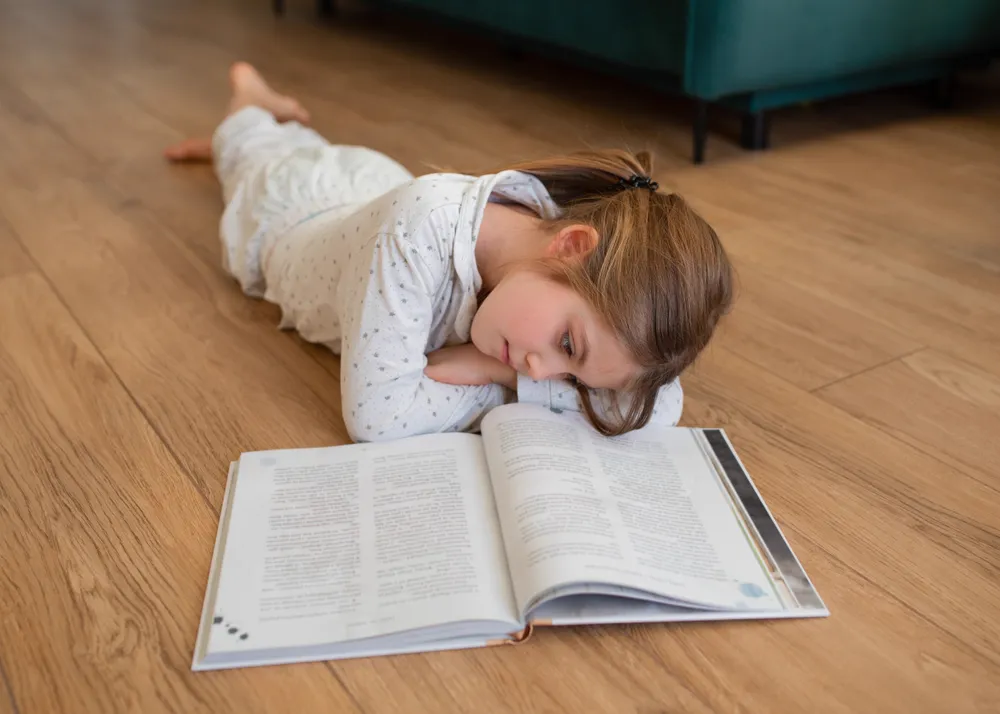
Third grade is a major transition year for your child. Up until now, early elementary school has focused heavily on sounding out words, recognizing vocabulary, and building reading fluency. Your child has likely spent the last few years mastering the mechanics of reading. But right around third grade, the expectations suddenly change.
Students are now expected to understand more complex ideas. The books get longer, the pictures disappear, and the questions become harder. Because of this sudden shift, many bright and capable children begin struggling with reading for the first time. It is completely normal for parents to feel worried or confused when their child suddenly hits a wall.
If you are looking for reading comprehension 3rd grade help, you are not alone. Many children face 3rd grade reading comprehension problems because they have not yet developed the foundational skills needed to process and remember what the words mean. They can read the words beautifully out loud, but the meaning slips away by the time they reach the end of the page.
The good news is that these difficulties are highly treatable once you understand the root cause. A child struggling reading comprehension 3rd grade simply needs to learn how to visualize and process language differently. This guide will explain exactly what is happening and point you toward effective reading comprehension programs for elementary students that can help your child succeed.
Why Reading Comprehension Often Becomes Difficult in 3rd Grade
The jump from second to third grade brings a fundamental shift in how schools teach. The classroom environment changes, and reading is no longer just a subject to be practiced. It becomes the primary tool used to learn every other subject.
Shift From Learning to Read to Reading to Learn
In earlier grades, teachers focus on phonics. The goal is simply to decode words on a page. By third grade, the educational system assumes that children know how to read fluently. The focus completely shifts from "learning to read" to "reading to learn." Students are suddenly expected to read a passage and extract facts, learn historical events, or understand scientific concepts. If a child has not developed strong comprehension habits, this transition can be incredibly overwhelming.
Longer Reading Assignments
Chapter books replace picture books. The paragraphs get thicker, and the text gets smaller. Without illustrations to provide clues about the story, children must rely entirely on the words to figure out what is happening. This requires a much higher level of mental endurance.
More Independent Work
Third graders are expected to read passages quietly at their desks and answer questions on their own. Teachers provide less direct guidance during reading time. For a child who relies on an adult to help explain the story, this increase in independent work often leads to frustration and falling behind.
Common 3rd Grade Reading Comprehension Struggles
When expectations rise, 3rd grade reading comprehension difficulties often become obvious at home. Parents usually notice specific patterns during homework time or evening reading sessions.
Reads Fluently but Doesn’t Understand
One of the most confusing 3rd grade reading comprehension problems is when a child sounds like a perfect reader. They read out loud with great expression, rarely stumble on big words, and seem completely engaged. Yet, a 3rd grade reads but doesn’t understand the actual story. When you ask them what the chapter was about, they give a blank stare.
Forgets What Was Read
Some children seem to understand the story while they are reading it. However, a 3rd grade forgets what they read almost immediately after closing the book. By the time they need to answer a worksheet question or tell you about the plot, the information has vanished from their memory.
Struggles With Comprehension Questions
Homework in third grade often involves reading a short text and answering questions at the end. Children with comprehension struggles will frequently guess at the answers. They might look for matching words in the text without understanding the context, or they might write down answers that make no sense based on the story.
Difficulty Retelling Stories
When you ask your child to summarize a movie or a book, their explanation might be highly disorganized. They might start at the end, skip major events, or focus on a tiny, unimportant detail while missing the main plot entirely.
Homework Takes Longer
Because reading comprehension struggling 3rd grade students have to re-read passages multiple times to find answers, homework becomes a nightly battle. A reading assignment that should take fifteen minutes can easily stretch into an hour of tears and frustration.
What 3rd Grade Students Are Expected to Do
Understanding reading comprehension expectations 3rd grade helps parents know exactly what skills their child needs to practice. Schools are looking for specific abilities by the end of the year.
Identify Main Idea
Students must be able to read a paragraph and explain the most important point the author is trying to make. They need to separate the main idea from the smaller, supporting details.
Answer Questions About Text
Children are expected to answer "who, what, where, when, and why" questions based on a story. They also need to make simple inferences, which means finding answers that are not explicitly written in the text.
Summarize What They Read
A core expectation is the ability to read a chapter and provide a brief, logical summary. They must explain what happened at the beginning, the middle, and the end in the correct order.
Follow Written Directions
Math word problems and science experiments require children to read instructions and follow them accurately. A lack of comprehension can cause a child to fail a math assignment, even if their calculation skills are excellent.
Why Some 3rd Grade Students Fall Behind in Comprehension
If your child is smart, articulate, and capable, you might wonder why they are having 3rd grade comprehension difficulties. The answer usually lies in how their brain processes language.
Reading Without Creating Meaning
Some children view reading as a mechanical task. Their brain is entirely focused on pronouncing the words correctly. They treat reading like a performance rather than a way to gather information. Because all their mental energy goes into decoding, none is left to process the meaning.
Weak Reading Memory
Working memory plays a huge role in reading. A child must hold the first sentence in their mind while reading the second sentence, and then connect the two ideas. If their reading memory is weak, the information falls out of their brain before they can connect the dots.
Difficulty Organizing Information
Even if a child understands the individual sentences, they might struggle to see the big picture. They collect scattered facts but cannot organize them into a cohesive story or a logical sequence of events.
The Foundational Skill That Helps 3rd Grade Comprehension
There is a specific cognitive process that strong readers use automatically. When parents want to know how to improve reading comprehension 3rd grade, they often turn to vocabulary drills or extra reading time. However, those methods rarely work if the child is missing the true foundation of comprehension.
Visualization While Reading
The secret to strong reading comprehension is visualization. Good readers automatically create mental movies while they read. When they read the word "dog," they don't just see the letters D-O-G. They picture a specific dog in their mind. They see its color, its size, and its surroundings.
Mental Images Improve Understanding
Creating mental images turns abstract words into concrete concepts. When a child can see the story unfolding in their imagination, they are no longer just decoding words. They are experiencing the story. This makes complex ideas much easier to grasp and makes reading a highly engaging activity.
Why Visualization Supports Memory
Human brains are wired to remember pictures much better than isolated words. If a child pictures a blue car driving quickly down a bumpy dirt road, they will easily remember that detail later. Visualization acts like mental glue, holding the facts together so the child can recall them to answer questions or write summaries.
How Reading Comprehension Improves in 3rd Grade
When a child learns how to visualize and process language correctly, you will see noticeable changes in their academic performance. Their 3rd grade reading comprehension skills will stabilize, and reading will become less stressful.
Students Retell More Easily
Because they have a mental movie to reference, children can easily retell stories. They simply describe the pictures they created in their head, which naturally helps them keep events in the correct order.
Students Remember Details
With strong visualization, memory improves dramatically. Students can easily recall character names, settings, and specific events without having to constantly flip back through the book.
Students Answer Questions
Answering homework questions becomes a simple task. When asked "Why did the character run away?", the child simply looks at their mental image of the scene and describes what was happening.
Students Work More Independently
As comprehension improves, confidence grows. Children no longer need a parent sitting next to them to explain every paragraph. They can tackle their homework quietly and efficiently.
Ways to Support 3rd Grade Reading Comprehension
Providing 3rd grade comprehension help at home does not require you to be a teacher. You can support your child by changing how you talk about books together.
Ask What They Picture
Stop asking "What did you just read?" Instead, ask "What are you picturing in your mind right now?" Encourage your child to describe the size, color, shape, and background of their mental images. If they say they aren't picturing anything, help them build the image together.
Discuss What Was Read
Have casual conversations about books. Relate the characters in the story to people your child knows. Connecting the text to real-life experiences makes the information more meaningful and easier to remember.
Encourage Retelling
After reading a few pages together, pause and ask your child to summarize what just happened. Keep it light and conversational. If they miss a detail, gently remind them by asking a guiding question about their mental picture.
Short Reading Practice
Do not force a struggling reader to sit for an hour. Keep reading sessions short. Ten minutes of highly focused, visualization-based reading is much more effective than an hour of frustrated, tearful decoding.
When 3rd Grade Students Need Structured Comprehension Support
Sometimes, practicing at home is not quite enough. If your child has been struggling for a while, they might need a more systematic approach to build their visualization skills.
Students Who Read but Don’t Understand
If your child can read chapter books out loud flawlessly but cannot answer a single question about the plot, they need structured help to connect language to meaning.
Students Who Forget What They Read
Children who instantly forget a paragraph the moment they finish reading it require specific exercises to build their working memory and visualization habits.
Students Who Struggle With Homework
If nightly homework is causing severe anxiety, dragging on for hours, or requiring constant parental intervention, a structured program can provide the exact tools your child needs to become independent.
Reading Comprehension Programs for 3rd Grade Students
If you are looking for formal reading comprehension help for 3rd grade, it is important to choose the right approach. Tutoring that focuses only on phonics or vocabulary will not fix a comprehension issue. You need structured reading comprehension programs that explicitly teach children how to visualize and process language.
Look for methods developed by educational therapists that focus on the cognitive root of reading. Programs that teach children how to create mental images, hold them in their memory, and use them to answer questions are incredibly effective. You can learn more about finding the right fit in our guide to How to Improve Reading Comprehension for Elementary Students.
What Parents Often Notice When Comprehension Improves
When a child finally bridges the gap between reading words and understanding meaning, the transformation is wonderful to watch.
Better Homework Time
The nightly battle over reading assignments disappears. Homework takes a fraction of the time it used to, and the house becomes much more peaceful in the evenings.
Improved Confidence
Your child will stop calling themselves "stupid" or "a bad reader." They will start participating more in class because they finally understand what is going on.
Stronger Memory
You will notice their memory improving not just in reading, but in everyday life. They will be better at following multi-step directions and remembering conversations.
More Independent Work
Ultimately, your child will be able to manage their own learning. They will pick up books for pleasure, complete assignments on their own, and thrive in the upper elementary grades.
FAQ Section
How can I help my 3rd grader with reading comprehension?
The best way to help 3rd grader with reading comprehension is to teach them how to visualize. Ask them to describe the pictures they make in their mind while reading. Keep reading sessions short and discuss the story frequently to ensure they are building mental images instead of just reading words.
Why is my 3rd grader struggling with comprehension?
Many children struggle in third grade because the focus shifts from learning to read to reading to learn. Books lose their pictures, sentences become more complex, and students are expected to work independently. If your child hasn't developed the habit of visualizing the text, they will easily fall behind.
What should a 3rd grader understand when reading?
By the end of third grade, a student should be able to identify the main idea of a passage, summarize a story in the correct order, answer who/what/where/when questions, and make simple inferences based on the text.
Is it normal for 3rd graders to struggle with comprehension?
Yes, it is very common. Third grade is a major transition year. Many bright children who were excellent readers in first and second grade suddenly face difficulties because the cognitive demands of reading change drastically.
Does visualization help 3rd grade comprehension?
Absolutely. Visualization is the foundational skill behind all reading comprehension. It allows children to turn abstract letters into concrete mental movies, which vastly improves their ability to understand, remember, and retell what they have read.
How do I improve reading comprehension in 3rd grade?
To improve comprehension, shift the focus away from simply reading faster. Focus on making meaning. Use structured visualization exercises, ask open-ended questions about their mental images, and consider a specialized reading comprehension program if they need more targeted, step-by-step support.